

Pollinator Gardens: Small Spaces, Big Climate Impact
Pollinator gardens – from window boxes to park plots – pack a punch when it comes to climate and community benefits. By replacing turf or bare ground with diverse native flowers, even a modest pollinator garden creates a mini ecosystem that boosts biodiversity, improves soil health, and builds urban resilience (1)(2). Unlike high-maintenance lawns, these gardens thrive on low inputs (water, fertilizer, mowing) once established (3), making them cost-effective ecological designs. Wilmot can help communities design pollinator plantings that engage citizens, enhance local ecosystems, and even store carbon in soils for climate benefit (4).
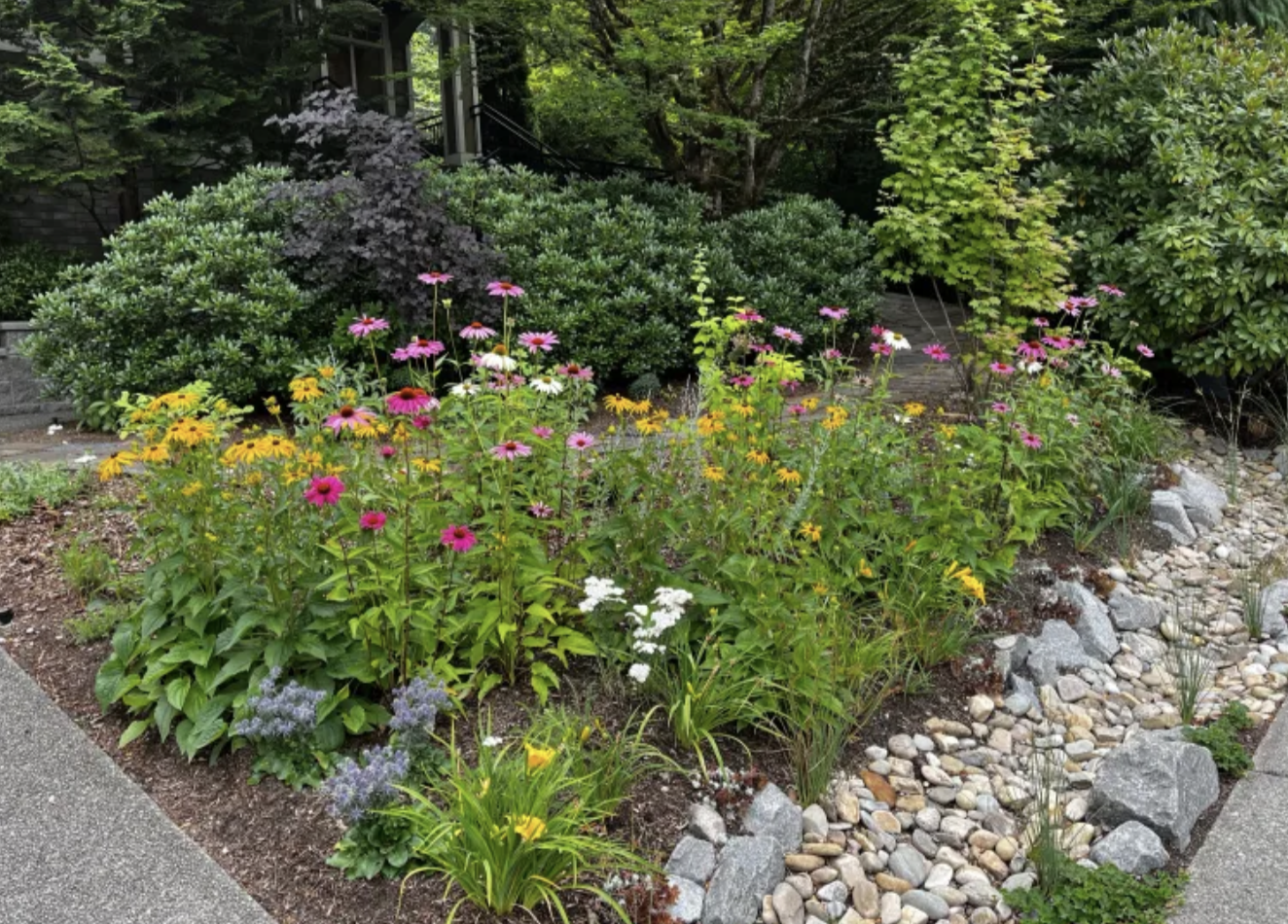
Supports Biodiversity
Pollinator gardens feed and shelter bees, butterflies, birds, and other wildlife. Native flowers and host plants are crucial: about 80% of flowering plants rely on animal pollination to set seed (5). A diverse, native-rich garden can attract a wide web of pollinators (and natural pest predators) that would not thrive in a typical lawn, strengthening the local food web (6)(2). For instance, a University of Minnesota study found that increasing native plant density in urban areas led to a significant rise in bee and butterfly abundance within just one season (1).
Enhances Soil & Water Quality
Deep-rooted native perennials act like sponges and filters. Their roots improve soil structure, reduce erosion, and increase water infiltration (1). Some native prairie grasses have roots that extend 10–15 feet underground, creating natural water channels that reduce runoff and increase groundwater recharge (1). Over time, these richer soils can store more carbon (4) and trap stormwater-borne pollutants before they reach streams or sewers, keeping urban waters cleaner. Studies also show that native plantings can remove up to 80% of total suspended solidsand 70% of phosphorus from stormwater, functioning similarly to engineered bioretention systems (1).
Builds Ecosystem Resilience
By creating habitat stepping-stones in urban areas, pollinator gardens help wildlife move and adapt. Native plantings typically avoid chemical fertilizers and pesticides, so they create safer spaces for beneficial insects and birds and reduce our chemical footprint (2). The plants also moderate microclimates by providing shade and retaining soil moisture, buffering heat and storm impacts in tight urban sites. According to the USDA, increasing habitat connectivity through urban pollinator gardens supports both insect migration and local adaptation in response to climate change (2).
Low-Maintenance Landscaping
Once established, native pollinator plants demand far less upkeep than turf grass. Many perennials die back each winter and regrow in spring, cutting down on mowing, watering and fertilizing (3). This “plant-and-forget” quality makes pollinator gardens especially attractive for community projects, schools, and corporate campuses. The USDA reports that converting lawn to native pollinator habitat can reduce maintenance labor by up to 50% and save significant costs over time (2)(3). Native meadows also require 70–90% less water than conventional turf grass, depending on the region (1).
By the Numbers: Why Pollinator Gardens Matter
One out of every three bites of food we eat depends on pollinators like bees, butterflies, and birds (2).
Since the 1990s, North America has lost over 90% of its monarch butterfly population due to habitat loss, pesticide use, and climate change (2).
Nearly one-third of native U.S. bee species are in decline, with habitat loss being a primary driver (2).
Native wildflowers and grasses have been shown to increase pollinator diversity by up to 50% compared to turf grass areas (1).
Pollinator gardens with deep-rooted perennials can reduce stormwater runoff by 30–65%, improving infiltration and protecting waterways (1).
Maintenance of turfgrass costs the U.S. over $40 billion annually – replacing just a fraction of that with native gardens could cut emissions, save water, and improve habitat (3).
A mature prairie or wildflower planting can store up to 3 tons of carbon per acre per year in plant biomass and soil (4).
Wilmot’s nature-based solution experts often integrate pollinator gardens into broader sustainability plans. These plantings pair well with our biodiversity consulting and community engagement work: for example, organizing volunteer planting days not only beautifies neighborhoods but also builds stewardship and awareness. In short, thoughtful pollinator garden design turns even small sites into climate-smart, life-supporting landscapes (1)(4).
Sources:
[1] Backyard Landscape Best Management Practices for Pollinators | IPM and Pollinator Conservation https://ncipmhort.cfans.umn.edu/ipm-bmp-cultural-control/backyard-landscape-best-management-practices-pollinators
[2] The Importance of Pollinators | USDA https://www.usda.gov/about-usda/general-information/initiatives-and-highlighted-programs/peoples-garden/importance-pollinators
[3] The Importance of a Pollinator Garden – Emory Office of Sustainability Initiatives https://sustainability.emory.edu/the-importance-of-a-pollinator-garden/
[4] Pollinator Projects Help Sequester Carbon (U.S. National Park Service) https://www.nps.gov/articles/000/pollinator-projects-sequester-carbon.htm
[5] Pollination: A Critical Ecosystem Service https://www.fs.fed.us/wildflowers/pollinators/importance.shtml
[6] Native Plants for Pollinators (NRCS) https://www.nrcs.usda.gov/sites/default/files/2022-11/Native_Plants_for_Pollinators.pdf