

Why is Stream Restoration a Climate + Community Win?
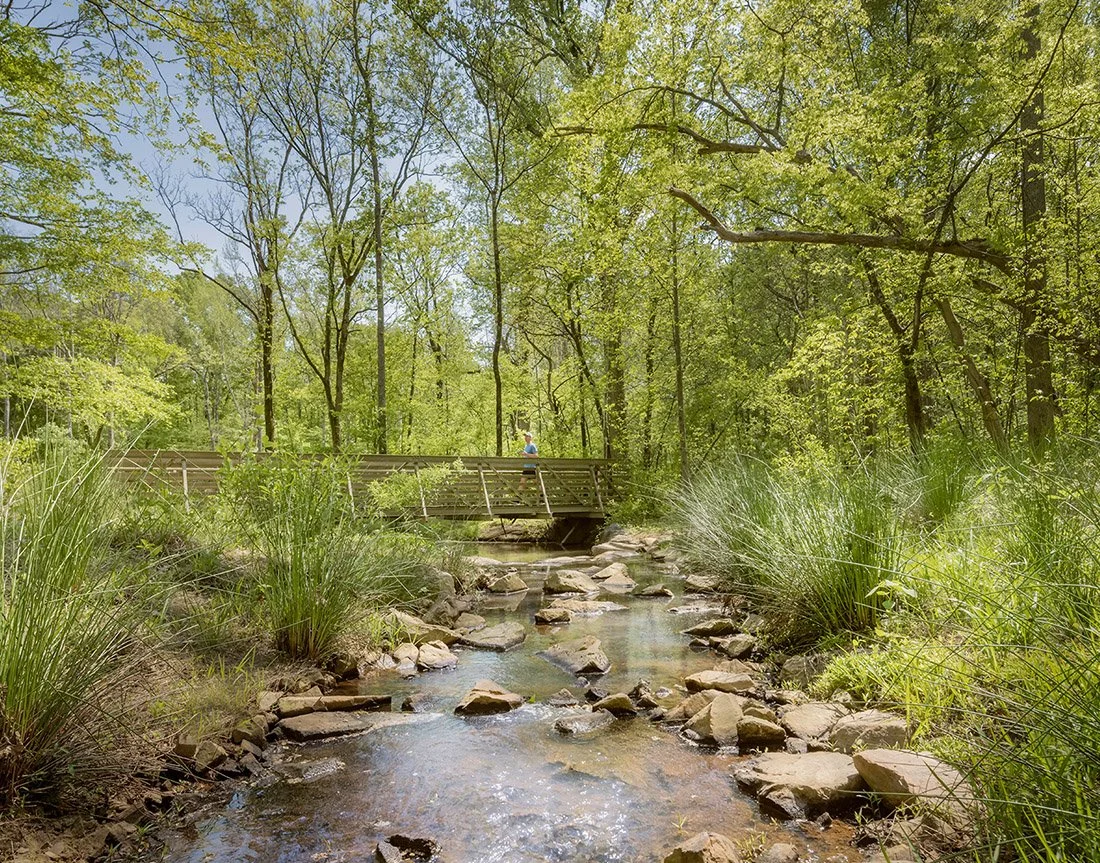
Stream restoration (repairing degraded waterways by re‑establishing natural channel shapes, floodplains, and vegetation) is a powerful nature‑based solution for climate and community challenges (epa.gov) (fairfaxcounty.gov). By slowing and spreading flows, filtering stormwater, and rebuilding habitat, restored streams deliver cleaner water, flood protection, and richer ecosystems for people and wildlife. The benefits are real and well documented: FEMA and EPA note that stream and floodplain restoration “provides benefits of flood risk reduction and improving water quality and habitat for fish and wildlife” while offering recreation and erosion control (epa.gov). Reconnecting streams to their floodplains, literally, gives them room to breathe, soaking up floods and trapping sediments and nutrients that would otherwise foul rivers and reservoirs (fairfaxcounty.gov) (epa.gov). The result is safer communities and healthier watersheds, a true triple‐bottom‐line win (environmental + social + economic).
Cleaner Water and Healthier Watersheds
A primary payoff of stream restoration is improved water quality. When a channel is re‑engineered with meanders, native plants, and wetlands, it acts like a natural filter. Floodplains and vegetated banks slow the water and capture sediment, excess nutrients, and pollutants from storm runoff (fairfaxcounty.gov) (water.phila.gov). As Fairfax County puts it, restored floodplains “slow down the water, trap sediment, nutrients, and carbon, and hydrate wetlands.” (fairfaxcounty.gov). This means less sediment and contamination reaching lakes, reservoirs, and downstream ecosystems. Philadelphia’s watershed experts note that healthy riparian buffers intercept sediment and pesticides and reduce nutrient pollution in groundwater (water.phila.gov). Over time, a clean, stable stream channel leads to clearer water, lower drinking-water and treatment costs, and fewer algal blooms. In Denver and elsewhere, utilities invest in riverside restoration exactly to keep sediment out of reservoirs and reduce long-term treatment expenses (nrdc.org).
Reducing Flood Risk & Building Resilience
Nature is an excellent sponge. Restoring streams gives cities and towns extra storage capacity for stormwater. FEMA’s guidance emphasizes that reconnecting rivers to their floodplains allows floodwaters to spill into wetlands and meadows, cutting peak flood stages and protecting downstream infrastructure (epa.gov) (epa.gov). In practical terms, restored stream corridors can “provide capacity for storing storm water runoff, reducing the number and severity of floods, and minimizing non‑point source pollution.” (epa.gov). In Vermont, for example, scientists estimated that a network of riverine wetlands now avoids $126,000–$450,000 per year in flood damages by holding back high waters (nrdc.org). Such savings cover a substantial share of the wetland’s conservation cost. By lowering flood peaks and velocities, restoration also shields roads, bridges, and homes – a key infrastructure benefit FEMA highlights (epa.gov).
Boosting Habitat and Biodiversity
Restored streams are vibrant ecosystems. By adding woody debris, plants, and side-channels, projects create habitat diversity that attracts fish, bugs, and birds. Meta-analyses show that adding in-stream structures or wood consistently raises aquatic insect diversity and abundance (usu.edu). One study found that simply increasing structural complexity (like large woody debris) had a “significant, positive effect” on macroinvertebrate (aquatic insect) richness (usu.edu). Likewise, replanting forests along streams (riparian buffers) provides shade, leaf litter, and woody debris – the food and shelter base of the stream food web. Philadelphia’s water department notes that vegetated streambanks “provide wildlife habitat” and create shaded, cooler water that supports more life (water.phila.gov).
Wildlife responds fast: in Atlanta, a once-polluted urban creek (McDaniel Branch) was fully restored and reconnected to wetlands, turning the area into a wildlife sanctuary (accesswater.org). Once vacant lots now boast ponds and native meadows that “attracted wildlife that could not otherwise be conceived in a dense urban setting” (accesswater.org). Fish and bird populations rebound, too: in British Columbia, a program of floodplain reconnection helped spawn 27–34% more out-migrating coho salmon smolts, directly boosting commercial and recreational fisheries (nrdc.org). These ecological gains enrich local biodiversity and often improve fisheries, birdwatching, and recreation opportunities in restored streams.
Community & Climate Benefits
The “green” benefits translate into community resilience. Restored streams become parks, trails, and greenways that improve the quality of life. They slow storm surges in big rains (a climate adaptation), recharge groundwater in droughts, and can even cool neighborhoods on hot days. Social surveys confirm that neighbors value these projects: residents place high importance on stream health and safety (stormwater.wef.org). In one study, local households were willing to pay an extra $127/year each (over $50 million regionally) for a stream-restoration project that planted more bank trees and reduced urban runoff (stormwater.wef.org), evidence that communities see tangible benefits.
In practice, stream restoration often goes hand-in-hand with green infrastructure planning. By combining project design with stormwater controls (rain gardens, permeable pavements, constructed wetlands), cities amplify the effect. Atlanta’s McDaniel Branch is a leading example: 1,100 feet of stream were rebuilt, old sewers rerouted, and a series of new ponds and wetlands installed to treat runoff. The result was not only cleaner water and flood mitigation, but also an accessible greenspace that “revitalized an urban neighborhood” (accesswater.org). Neighbors who were once indifferent now recognize the “community benefits” of this restored habitat (accesswater.org). Restoring streams creates amenities (parks, trails, wildlife viewing) that strengthen the social fabric and can raise adjacent property values (en.wikipedia.org).
Even economically, the math adds up. FEMA notes that the flood reduction alone can make projects cost-effective; the EPA’s benefit-cost tool for mitigation can credit the avoided damage (epa.gov). And when you include ecosystem services, cleaner water (lower treatment costs), recreation and wildlife, the return on investment is higher still. For instance, re‑established beaver habitat (a form of stream restoration) has been estimated to deliver about $690 per hectare per year in combined benefits across fish, agriculture, and tourism (nrdc.org). Investing in stream restoration today pays dividends in resilience, health, and economic savings tomorrow.
In sum, stream restoration is nature’s infrastructure. By working with natural processes, floodplains, vegetation, and stream dynamics, these projects check many boxes: water quality, flood control, habitat restoration, community well-being, and climate adaptation all at once (epa.gov) (fairfaxcounty.gov).