

Don't Just Retrofit the Building — Rethink the Parking Lot.
Modern sustainability efforts often focus on building retrofits, yet an enormous climate opportunity is hiding in plain sight: the vast expanse of surface parking lots. In the United States alone, there are an estimated 2 billion parking spaces paving over roughly 26,800 km² – an area about the size of the entire state of Vermont [1]. These asphalt oceans aren’t just idle land; they actively contribute to urban environmental problems. Large parking lots intensify urban heat islands and generate polluted stormwater runoff, but with green design strategies they can be transformed into high-performance infrastructure. By integrating permeable pavements, tree-lined islands, bioswales, and solar canopies, we can turn heat-trapping asphalt deserts intocooler, cleaner, and more productive spaces that benefit both people and the planet. This article dives into how “green parking” retrofits work and quantifies the key benefits – from heat reduction in degrees to stormwater captured in gallons and solar energy produced in kilowatts.
The Overlooked Climate Opportunity Under Our Tires
Parking lots have long been designed for cars at the expense of the environment. Impervious asphalt prevents any rainwater from soaking into soil, contributing to flash flooding and water pollution as oil, metals, and other contaminants wash off into sewers. At the same time, dark pavement absorbs and re-radiates solar energy, overheating the surrounding air. Studies show that sprawling parking areas can raise local air temperatures by 20–40 °F compared to vegetated areas[2]. On a hot summer day, sun-baked asphalt itself can reach extreme surface temperatures – one EPA pilot study in Arizona measured conventional blacktop at up to 152 °F at midday, far hotter than the air[3]. This heat not only makes the area uncomfortable, it also increases smog; high pavement temperatures and fuel vapors create ground-level ozone. In short, a typical parking lot is an urban heat island and stormwater hotspot all in one.
Transforming these “grey” lots into green infrastructure addresses multiple challenges at once. Reimagined parking lots can mitigate heat, manage stormwater, generate renewable energy, and even provide new community space – turning an environmental liability into a climate solution asset. The sections below quantify the benefits of key green parking design elements:
Permeable Pavements: Ending Runoff at the Source
One core strategy is to replace traditional asphalt with permeable pavement. Permeable (or porous) pavements – including pervious concrete, porous asphalt, and permeable interlocking pavers – allow rainwater to soak through the surface into an underlying stone bed and soil, instead of sheeting off[4][5]. This simple change drastically reduces stormwater runoff. In fact, field studies have found that permeable pavement can eliminate the vast majority of runoff. For example, an experimental parking lot study cited a 90.6% reduction in total stormwater volume when using innovative permeable pavements compared to standard concrete[6]. Essentially, only a trickle of water left the test site – over 90% infiltrated on-site – demonstrating how effective these pavements are at capturing rainfall.
By mimicking natural soil absorption, permeable paving also improves water quality. As water percolates down, the pavement and subsurface layers filter out pollutants like sediment, nutrients, and oils. The EPA notes that permeable pavements not only reduce runoff volume but also filter pollutants and even cool the water that eventually enters waterways[7]. This prevents the “dirty” warm stormwater surges that can shock streams and harm aquatic life. In practical terms, deploying porous pavement in a parking lot means far less need for storm sewers and retention ponds. One real-world project in Washington State found that using pervious concrete in a development eliminated the need for costly stormwater catch basins, pipes, and a detention vault – saving an estimated $264,000 in infrastructure costs[8][9]. Permeable pavement essentially turns the entire parking lot into a water infiltration system, relieving stress on municipal drainage during heavy rains.
Equally important, permeable pavements can help cool the environment. Unlike blacktop that dries quickly and radiates heat, moist porous pavements can provide an evaporative cooling effect. Some permeable concrete and paver surfaces are also lighter in color, reflecting more sunlight. Researchers have observed that under wet conditions (for instance, after a rain), permeable pavements stayed significantly cooler at the surface than conventional pavements, thanks to the water retained in their voids[6]. In this way, a parking lot with permeable paving not only manages water but also contributes to mitigating the urban heat island, especially after precipitation.
Bioswales and Rain Gardens: Nature’s Parking Lot Drainage
In addition to porous pavement, green retrofits add vegetated drainage features such as bioswales, rain gardens, or bioretention cells around the lot. These are shallow, landscaped depressions designed to soak up and filter runoff. Typically placed along parking lot perimeters or between rows of parking, bioswales use engineered soil, mulch, and deep-rooted plants to slow down water and trap pollutants. Instead of water gushing off asphalt into a storm drain, it is directed into these planted swales where it can pond temporarily, seep into the ground, and nourish vegetation.
The impact on runoff volume and quality is dramatic. A monitored bioswale installed to capture parking lot runoff in Davis, CA reduced the total stormwater discharge by 88.8%, nearly eliminating runoff leaving the site[10]. In that same installation, water quality testing showed reductions of 95% of nutrients, 87% of heavy metals, and 95% of sediments compared to the untreated runoff[11]. In other words, the bioswale trapped the vast majority of pollutants – nitrogen, phosphorus, oil, grease, and trash – that would otherwise flow into downstream waters. Vegetation and soil microbes in the swale effectively act as a living treatment system, breaking down hydrocarbons and uptaking nutrients. By the time water percolates through, it is much cleaner.
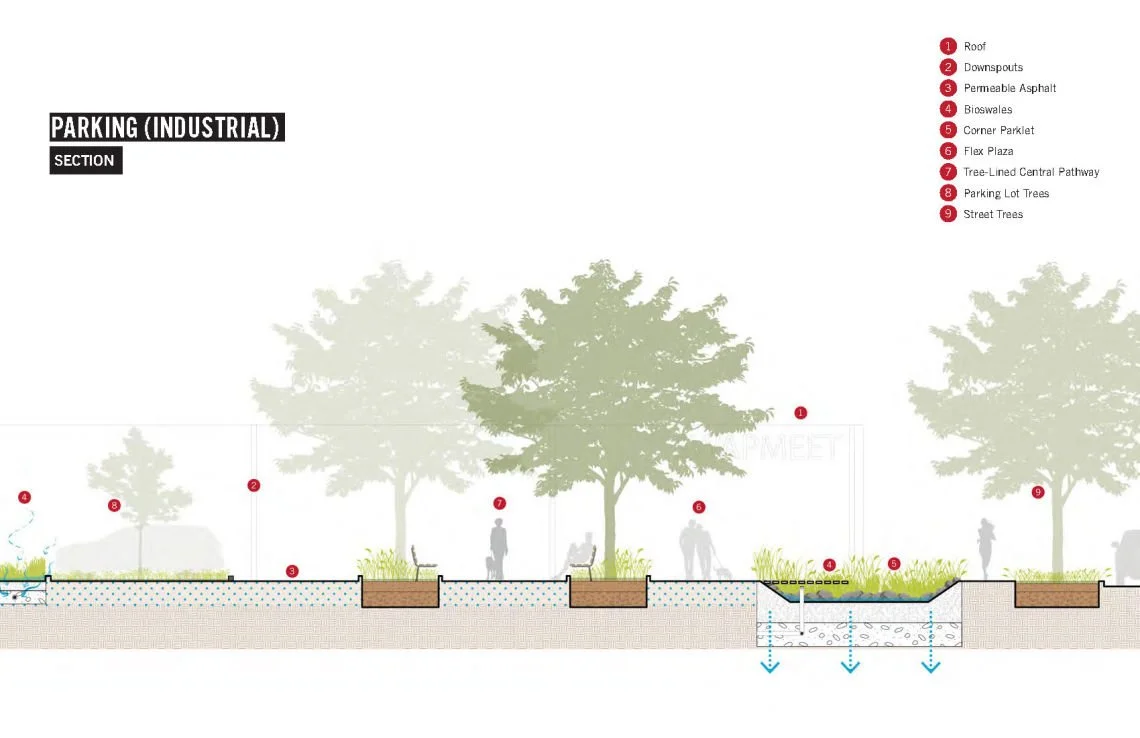
Cross-section of a retrofitted parking lot integrating multiple green infrastructure elements. Permeable asphalt (3) and underlying gravel allow rain to infiltrate, while planted bioswales (4) collect and filter excess runoff. Trees and landscaping provide shade and cooling, turning an industrial lot into a greener community asset[12].
Another benefit is that bioswales add aesthetic and habitat value. Instead of stark curb-and-gutter, a parking lot can feature strips of grasses, flowers, and shrubs that make the space more pleasant for people. These planted areas also support pollinators and urban wildlife, enhancing ecological connectivity in developed areas. Maintenance involves periodic weeding and sediment removal, but is often lower-cost than maintaining underground piped systems. Importantly, green drainage features handle everyday rains on-site and can reduce peak flows in larger storms, which helps prevent urban flooding. By capturing water at the source, green parking lots ease the burden on city stormwater systems and diminish the risk of combined sewer overflows, a key resilience goal for many communities[13].
Shading with Trees: Turning Hot Lots into Cool Oases
Perhaps the most immediately noticeable improvement to a retrofitted parking lot comes from adding trees and green islands. Where many parking lots are treeless expanses, a green redesign will introduce tree islands, perimeter shade trees, and lush planter beds in place of select parking spots or medians. The payoff in heat reduction is impressive. Trees directlyshade the pavement and vehicles, preventing sunlight from heating these surfaces. They also cool the air through evapotranspiration (release of water vapor). Research in California found that parking lot trees can reduce surface asphalt temperatures by up to 36 °F, and simultaneously lower the interior cabin temperatures of parked cars by 47 °F on hot days[14]. In practice, that means a car parked under a tree stays much cooler (47°F cooler!) than one baking in an unshaded lot – a huge difference for driver comfort and for reducing vehicle AC load.
By casting shade over pavement, trees help keep the surrounding microclimate significantly cooler. On a city scale, a neighborhood with abundant tree canopy can be several degrees cooler than one dominated by asphalt. Even a 10% increase in tree canopy cover can lower local air temperatures by about 1 °F[15]. In the context of a parking lot, studies show a few strategically planted trees can drop ambient air temps by a couple degrees and surface temps by dozens of degrees[16][17]. This cooling effect isn’t just about comfort – it can save lives during heat waves and improves air quality. Hot pavement and vehicles spur the formation of smog (ozone), but cooler conditions curb that effect. Notably, when cars are kept cooler, their fuel tanks and engines release fewer volatile organic compounds. An analysis in Sacramento estimated that achieving 50% shade coverage over the city’s paved surfaces would reduce evaporative hydrocarbon emissions by 1–2%, eliminating about 0.84 tons of pollutants per day – a meaningful step toward cleaner air[18]. Thus, parking lot trees don’t just cut the heat, theyreduce tailpipe-adjacent pollution and resultant ozone.
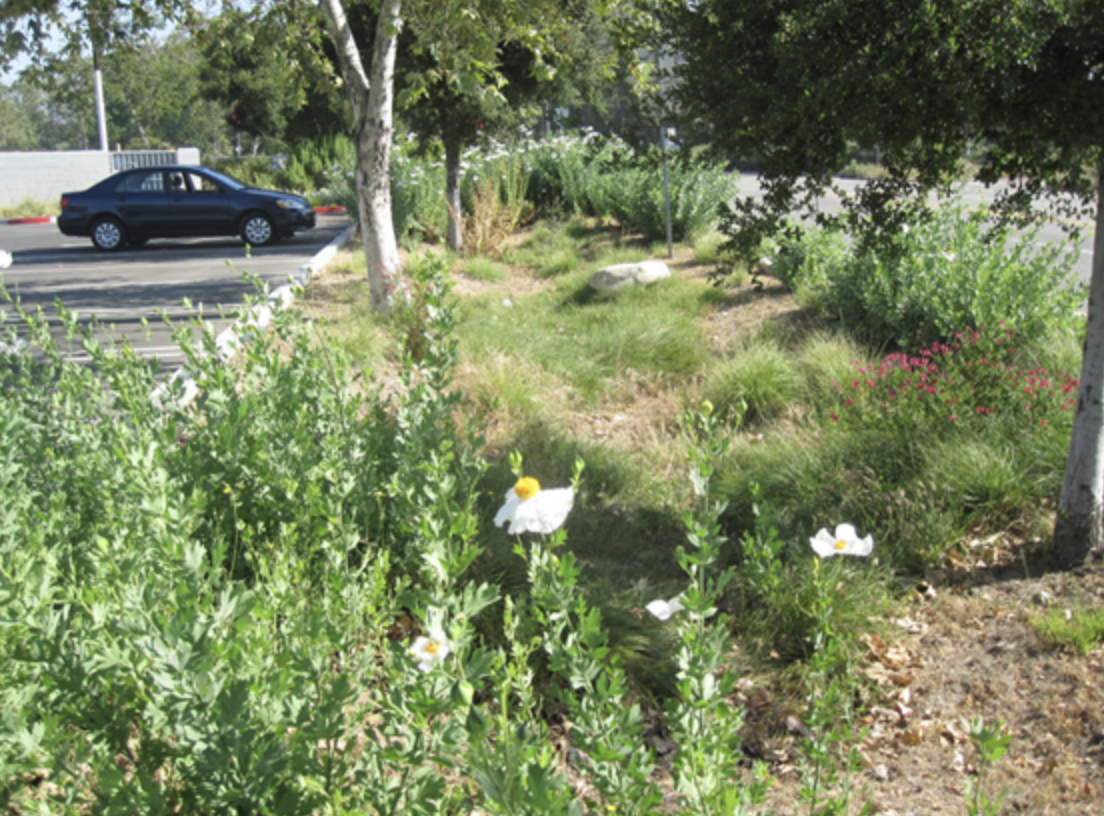
A “green” parking lot in Los Angeles featuring bioswales and shade trees. Vegetated islands and perimeter plantings break up the asphalt, infiltrate water, and cool the lot through shade and evapotranspiration. Such retrofits can lower surface temperatures by tens of degrees and greatly improve stormwater quality[19][10].
There are secondary benefits as well: Tree-lined parking areas improve visual appeal and walkability. Shaded parking lots feel more like parks than heat traps, making them friendlier for pedestrians moving between their cars and destinations. Studies have even noted economic benefits – shoppers tend to prefer and stay longer in tree-shaded parking areas, potentially boosting commercial activity. Moreover, healthy mature trees can increase property values for adjacent businesses or residences. By one estimate, integrating green infrastructure and trees into parking lots can extend the lifespan of pavement (by reducing heat stress and UV exposure) and add value to nearby properties, creating an economic win-win alongside the environmental gains[20].
Solar Canopies: Power from the Parking Lot
Another exciting retrofit option is installing solar photovoltaic canopies above parking spaces. These are essentially open-air solar panel structures that provide shade for cars underneath while generating clean electricity from the sun. Parking lot solar canopies turn an underutilized horizontal area into a mini power plant, often with capacity in the hundreds of kilowatts or even multi-megawatts. The dual benefits are immediate: vehicles get covered parking (shade and shelter) and the site produces renewable energy that can offset building consumption or be fed into the grid.
The energy numbers can be substantial. For example, Walmart built a covered parking solar array at an Arizona distribution center with 14,000 solar panels (3.3 MW capacity), which generates around 5 million kWh of electricity per year[21]. That output is enough to power over 400 average homes annually, from a single parking lot installation[21]. In New York, a large 4.2 MW parking lot solar project now yields roughly $500,000 in energy revenues each year via community solar subscriptions[22]. Even medium-scale systems make an impact: a solar carport at a VA hospital in Albuquerque (installed in 2011) produces 3.2 MW, supplying about 20% of the hospital’s annual electricity needs from sunlight[23]. This not only cuts utility costs but also hardens energy resilience for the facility. Another case study in Taiwan modeled a modest solar canopy powering an EV charging hub – generating ~140 MWh/year, which could charge about 3,000 electric vehicles per month for an hour each, while reducing carbon emissions by 94% compared to grid charging[24].
Solar canopies deliver clear climate benefits by reducing greenhouse gas emissions (every kWh of solar replaces a fossil-fuel kWh). But importantly, they too contribute to cooling and comfort. The panels act like an artificial shade tree over the asphalt. On a sunny day, cars parked under solar canopies are shielded from direct sun, keeping them cooler (much like under tree shade). As one observer noted, “solar-panel canopies also provide shade for parked vehicles and don’t require any more land than the existing lot”[25]. In essence, you get free shade as a byproduct of energy production. Furthermore, solar canopy installations can be paired with battery storage and EV charging stations, enabling the parking lot to directly support clean transportation. Drivers gain the convenience of charging their electric cars under shade, using solar power generated just overhead. This synergy between solar energy and EV infrastructure is increasingly attractive for campuses and commercial centers aiming for sustainability.
From Asphalt Wastelands to Climate-Resilient Assets
Retrofitting parking lots with green design elements is a fresh take on an overlooked climate solution. These interventions directly tackle the heat and flooding issues that plague cities, while also offering economic and social co-benefits. A conventional parking lot contributes to the urban heat island, but a green parking lot helps mitigate it – shaded, permeable, and vegetated surfaces can bring down temperatures significantly and create cooler microclimates[2][17]. A normal lot sends dirty runoff into sewers in seconds, whereas a green lot can retainand treat nearly all rainfall on-site, easing pressure on storm drains and improving water quality[10]. And rather than being a dead space, a solar-equipped lot becomes a source of clean energy, cutting emissions and powering surrounding buildings or vehicles[23].
Crucially, these strategies reinforce each other. Combining approaches maximizes the benefits: imagine a parking lot with permeable pavers underfoot, bioswales at the edges, trees throughout, and solar panels overhead. Rain that falls on the panels is routed to bioswales or rain gardens; water that hits the paving infiltrates into the ground; the trees and solar canopies together prevent most solar heat gain on the surfaces. Such a lot would stay much cooler on hot days, generate minimal runoff even in downpours, and produce renewable energy daily – truly a high-performance landscape. This systems-thinking approach aligns perfectly with broader urban resilience and sustainability goals. For instance, cities and consultants (like Wilmot’s stormwater planning and urban resilience services) are now looking holistically at sites to address climate risks. A green parking retrofit exemplifies this by tackling extreme heat, stormwater flooding, and carbon reduction all at once, at relatively low cost and using proven techniques.
In conclusion, it’s time to start viewing asphalt lots not as mundane afterthoughts, but as prime opportunities for climate action. Every parking lot is a blank canvas where green infrastructure and solar innovations can be deployed. Converting even a fraction of the millions of parking acres into greener, cooler, power-generating spaces would measurably improve urban environmental quality. It would lower city temperatures, alleviate strain on drainage during storms, cut pollution, and create new sources of clean energy – all while making our communities more pleasant places to live. The next time we plan a building upgrade for sustainability, we should remember to “rethink the parking lot” too. By retrofitting the seas of asphalt that surround us, we can drive a sizable shift toward healthier, more resilient cities – one parking space at a time.